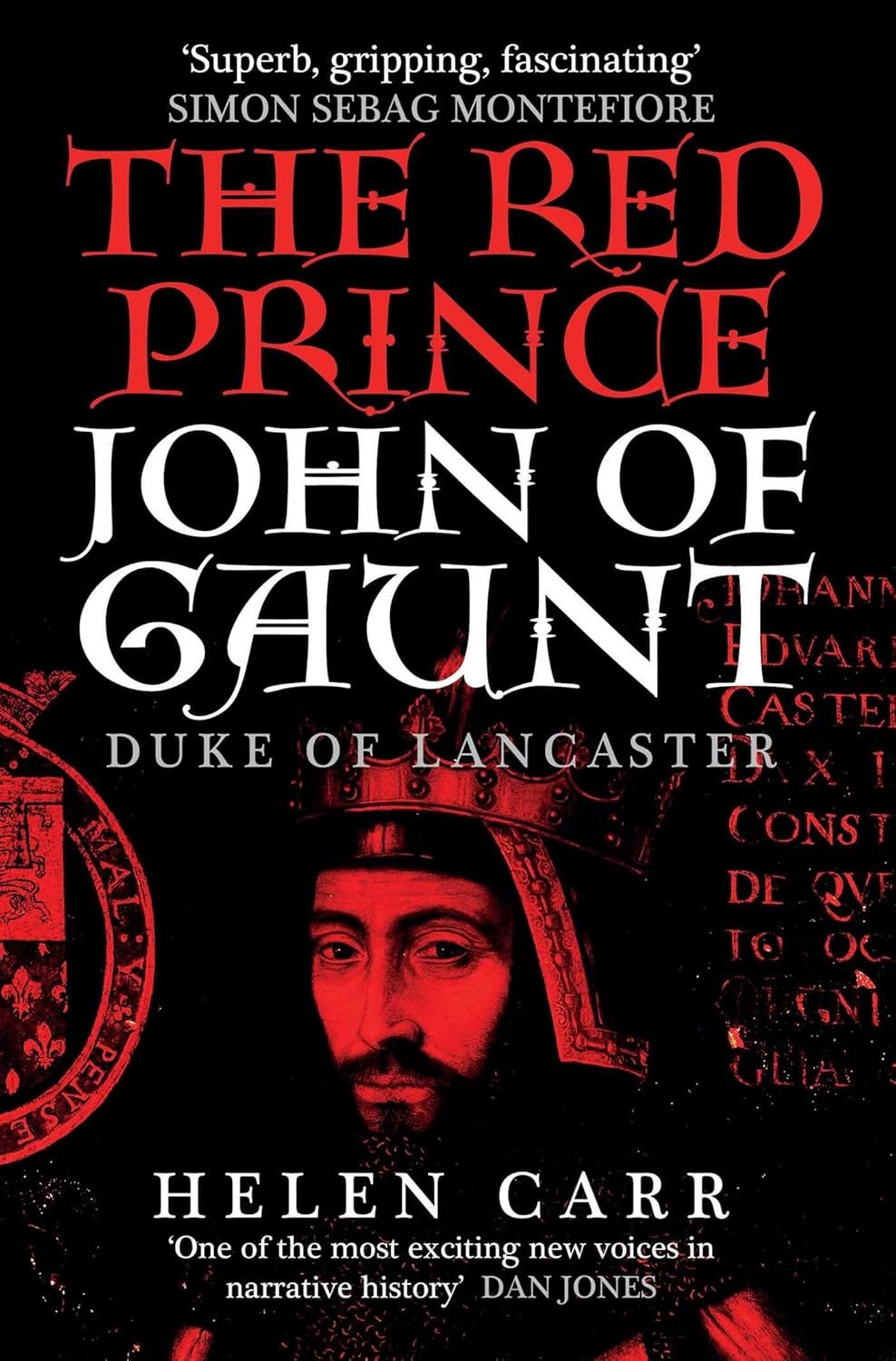
The Red Prince
The man behind the throne: who was John of Gaunt?


In 1904 the antiquarian historian Sydney Armitage-Smith asked the question, ‘John of Gaunt, what name on the roll of English princes is more familiar?’ So many people are just that, ‘familiar’ with John of Gaunt. a man known for his legacy — his fecundity. His legacy is his offspring but his ambitions, motivations, experiences and relationships during his lifetime is of far more interest than the children he sired. England, Scotland, Wales, Ireland, France and even Spain are peppered with reminders of John of Gaunt and his immense influence. His legacy is woven into the fabric of Britain and even today Gaunt’s memory endures.
My favourite space associated with Gaunt is Rothwell Church in Yorkshire, near where John of Gaunt had a hunting lodge. Rumour has it, that it was at Rothwell he killed the last wild boar in England (good old medieval myth making). Inside the functioning church today is a surcoat (a padded waistcoat), withered with age and kept inside a perspex case to try and prevent its fragile composition crumbling into nothingness. This surcoat was said to have belonged to Gaunt, fitting his tall, broad frame. Was it Gaunt’s surcoat? To be honest, probably not, but his memory is part of the identity of this town as it is elsewhere across England and Europe.
Despite Gaunt’s memory and mythology, his contribution to history — his dynastic, territorial, political influence has largely gone unrecognised because, for posterity, he has been overshadowed by the oft eulogised military kings and magnates of the Middle Ages. So why should we care about John of Gaunt?? What is it about his life that is so interesting? I think it is Gaunt’s experience of the world he lived in that was interesting. He was a key figure in two very different reigns. He witnessed the epoch of chivalry and the crashing reality of a post plague world and social change. There are many questions to ask about Gaunt’s life, but as with all narrative histories, we can start at the beginning in asking, who was John of Gaunt?
John of Gaunt was the third surviving the son of the warrior king, Edward III. Who has been eulogised by his own biographers as ‘the Greatest king’. Edward’s life and reign were dedicated to expanding Plantagenet rule overseas, and famously conquering France, claiming the throne by right of his mother, the French princess and former Queen of England, Isabella of France.
In 1337, Edward III began a war that has become known to posterity as the Hundred Years War. It was three years into this war of succession that John of Gaunt was born, in Ghent at the Abbey of Saint Bavon, where his mother, Philippa of Hainault was being held hostage in Flanders to mitigate an enormous loan the Flemish had donated to Edward III for his ambitious war. His birth was shortly followed by the first massive naval victory to Edward III, the Battle of Sluys, and it was on the return from the battle that Edward, reeling from the glittering success of this major victory, travelled to Ghent to recover his Queen and meet his baby son. The family returned to England and baby John was placed in the royal nursery at Woodstock Palace in Oxfordshire with his older bothers and sisters: Edward of Woodstock (later known as the Black Prince) who was ten years older than Gaunt, Lionel of Antwerp, Isabella Plantagenet and Joan Plantagenet. Over the course of her reasonably long life by fourteenth century standards, Philippa of Hainault did the ultimate queenly duty and gave birth around thirteen times in her life- she was nearly constantly pregnant or recovering from giving birth. With only a year between Gaunt and his younger brother Edmund, it is questionable whether her husband ever left her alone.
At around eight years old, Gaunt moved into the household of his older brother, the Black Prince- whose Victorian moniker still confuses people to this day. Some believe it was due to the colour of his armour whereas others blame his murky reputation as a warrior. Nonetheless, The Black Prince, was a hugely popular Prince in England- already a celebrity following his moment of military glory at the battle of Crécy where his father allegedly ‘let him win his spurs’. Legend has it, he plucked three feathers from the helmet of John of Bohemia, which became the iconic motif of the Prince of Wales that is still in use to this day.
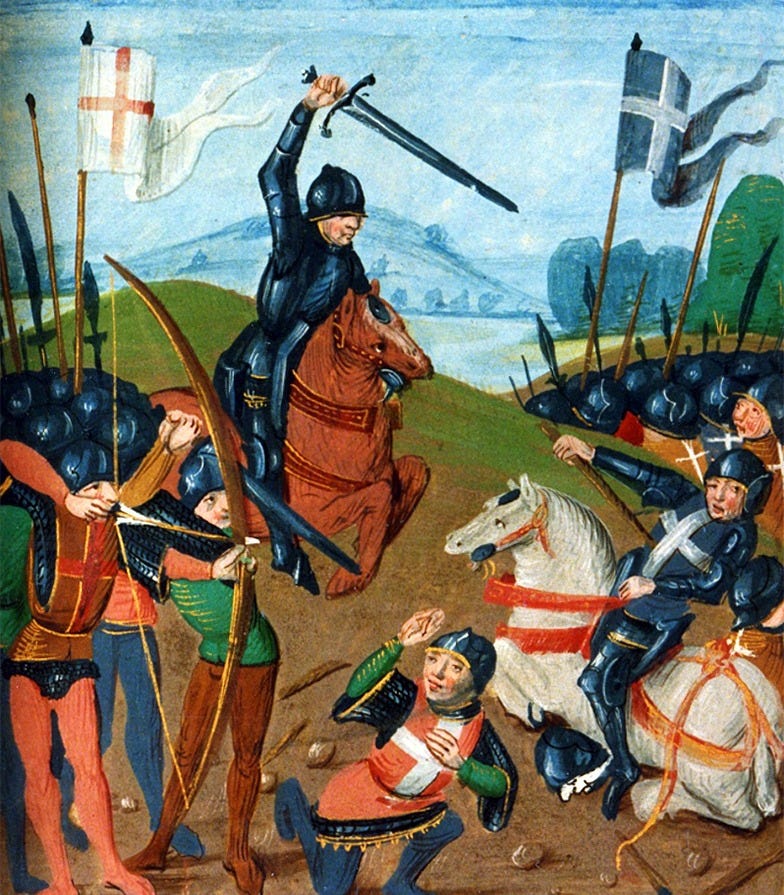
Whatever the truth behind the Prince’s character, he commanded admiration and adoration from his younger brother and the brothers formed a lifelong bond. The Black Prince taught Gaunt princely etiquette, and oversaw Gaunt’s training for combat, an expectation that all princes would be skilled warriors (the Prince even had armour made for his little brother). Importantly, under the supervision of the Black Prince Gaunt also learned how to manage land, following the example of his brother with his lands in Cheshire and Cornwall. As a boy, Gaunt was so attached to his brother that at ten years old, he refused to be parted from him when Castilian ships, allied to the French, attacked the English coastline resulting in the huge naval battle just off the coast of Winchelsea.
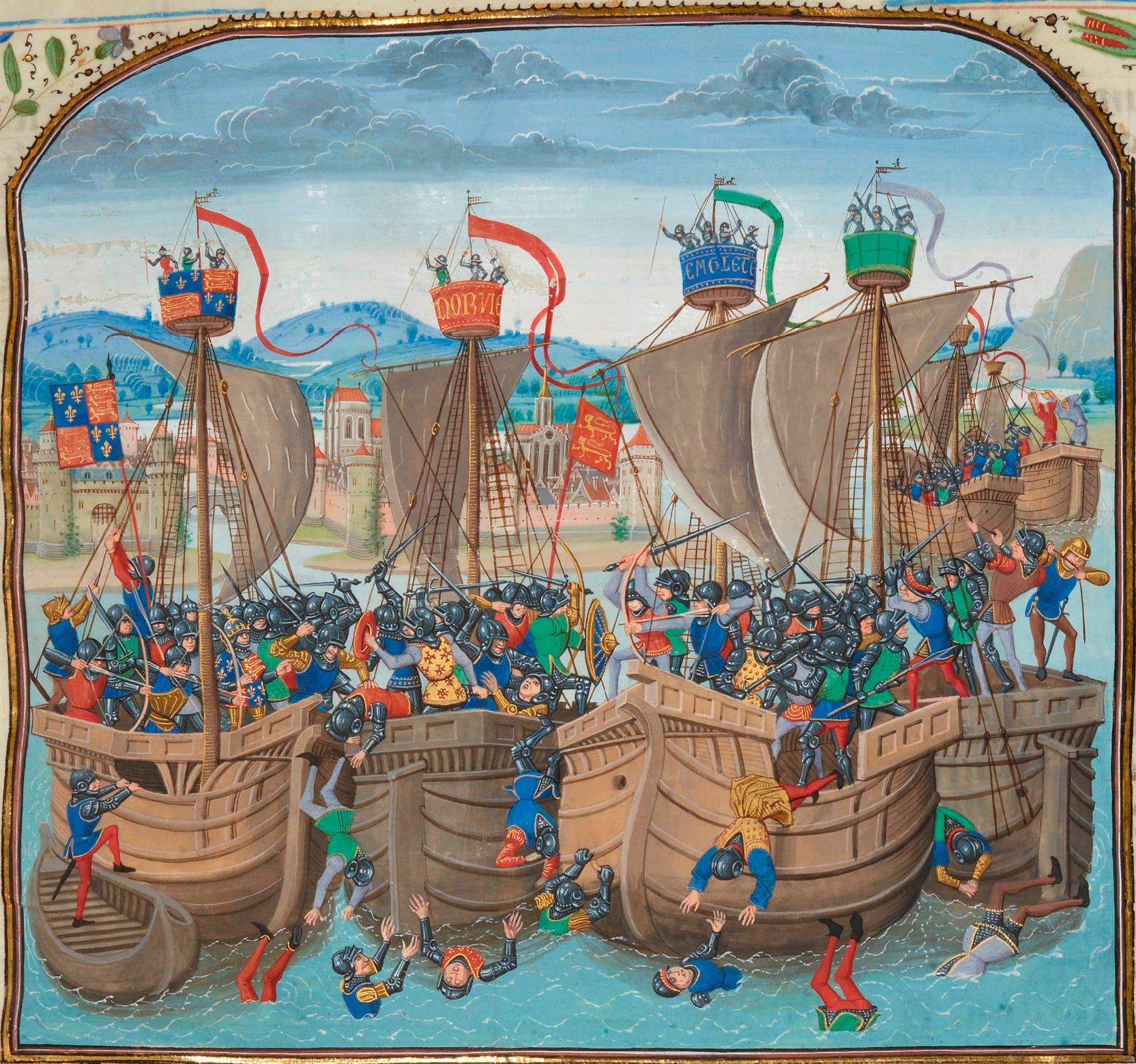
The Black Prince took his little brother on board his ship, which was later destroyed in the battle. Gaunt was unhurt but hundreds even thousands of men according to some accounts were lost. It is questionable why Gaunt was permitted to be part of the battle at ten years old. It is likely that the English did not anticipate the scale of the Castilian fleet, or their skill at sea. A harrowing or possibly exhilarating experience for a young John of Gaunt, but I imagine less so his mother who watched the battle unfurl from the clifftops. Five years later aged fifteen Gaunt was taken to France on his first land campaign where, at Calais he was knighted, a normal age for boys to take the sacred oath. Knighthood was an important ceremony for a young nobleman in the middle ages. In a deeply pious and sacred act, Gaunt was bathed, robed and dubbed a knight of the realm and he swore to uphold the knightly code of conduct for the rest of his life. A code he took very seriously.
Ceremony was important in this war and Edward III, was a king who understood the importance of propaganda in politics. He used it to his advantage when recruiting troops and when persuading the nobility, the people and the government that war in France was everybody’s prerogative. War in the fourteenth century became a national incentive propagandised by Edward through tournaments and jousts. Archery practice was compulsory. Edward III even established an elite military order, The Order of the Garter: a martial fraternity (that did and does admit some women) that exists and is still celebrated to this day. He perpetuated and developed the cult around King Arthur, even installing a round table at Windsor Castle and initiating a quest to recover the Holy Grail. He emulated his great-grandfather Edward I, an Arthur fanatic who had Arthur’s ‘remains’ interred at Glastonbury Abbey. This was the world in which Gaunt grew up, steeped in Arthurianisms and chivalry. Glory and nobility was associated with war and victory in battle. Much like the Black Prince at Crécy and later Poitiers. However the reality of war was ignoble. The English were the scourge of France and ravaged the countryside in a series of brutal chevauchees- a type of organised, deliberately destructive raid that took place across French villages and communes.
All of this was immortalised in the vast Apocalypse Tapestry woven in Paris around
1373, belonging to the count of Anjou. Within six sections and 90 scenes, there is a depiction of Edward III as a demon followed by his sons, appropriating apocalyptic imagery in reference to the Hundred Years War. For the French, the 1360s could be considered to be apocalyptic. The French nobility hid behind their chateau’s but it was the people who suffered. Rape, theft, murder, destruction of property were all common in the Hundred Years War and France was a battle ground. Gaunt himself assisted his father in law in an attack on the town of Cernay which they burned to the ground. When travelling through France the poet Petrarch commented ‘everywhere was grief destruction and desolation, uncultivated fields filled with weeds, ruined and abandoned houses.’
Few battles actually took place during the Hundred Years War- it was more guerrilla warfare and destruction of land that took place. The Black Prince’s men were attacked and murdered in their sleep.Deserting soldiers formed what were called Companies, described as worse than the plague. Gaunt’s experience of war was chivalry and glory juxtaposed with the reality, cruelty and destruction. Unlike his father and brother, Gaunt was a poor military leader. He was, however, a successful diplomat, utilised by his father through marriage negotiations for his younger brother, Edmund but most frequently as an advocate for the king, in Scotland. Throughout the rest of Gaunt’s life he was often found engaged in diplomatic negotiations on the Scottish Borders, primarily at Berwick on Tweed trying to render short periods of truce.
The relationship between England and Scotland has historically been contentious — the two kingdoms existing in a near constant state of war for the vast majority of the fourteenth century. From Bannockburn, when the Scots regained authority over their country under Robert the Bruce, to the Battle of Halidon Hill, where Edward III snatched it back again.
In 1357 as a way of maintaining peace but control over Scotland, Edward III restored David II, son of Robert the Bruce as King in Scotland but John of Gaunt was floated as a potential candidate as heir to the Scottish throne. Though this never materialised, Gaunt was popular in Scotland and throughout his life he was a regular visitor to the Borders to negotiate with the Scottish earls and during the Peasants Revolt, Scotland became a surprising safe space for Gaunt, as his countrymen rose up against him.
In 1359 John of Gaunt married Blanche of Lancaster, the younger daughter of Henry of Lancaster, cousin and great friend to Edward III and the first Duke of Lancaster.
It is through Blanche he acquired his great accolade, Duke of Lancaster. Henry had made a fortune off the back of war and on his death in 1361, followed by the
death a year later of his older daughter Maude, Gaunt and Blanche inherited land in Yorkshire, Lancashire, Leicestershire, Wales, Sussex, Cambridgeshire, Wiltshire, Dorset into northern France... The Duchy was a Palatinate, ruled separately to the crown and required serious management. John of Gaunt employed a retinue of men and women: a well oiled machine of service. These people included household servants, indentured retainers, estate officials and all wore a collar of linked esses.With this inheritance, Gaunt became the wealthiest and most powerful magnate in the realm, as well as being a Prince. He had serious power to play with and his ambition was endless.
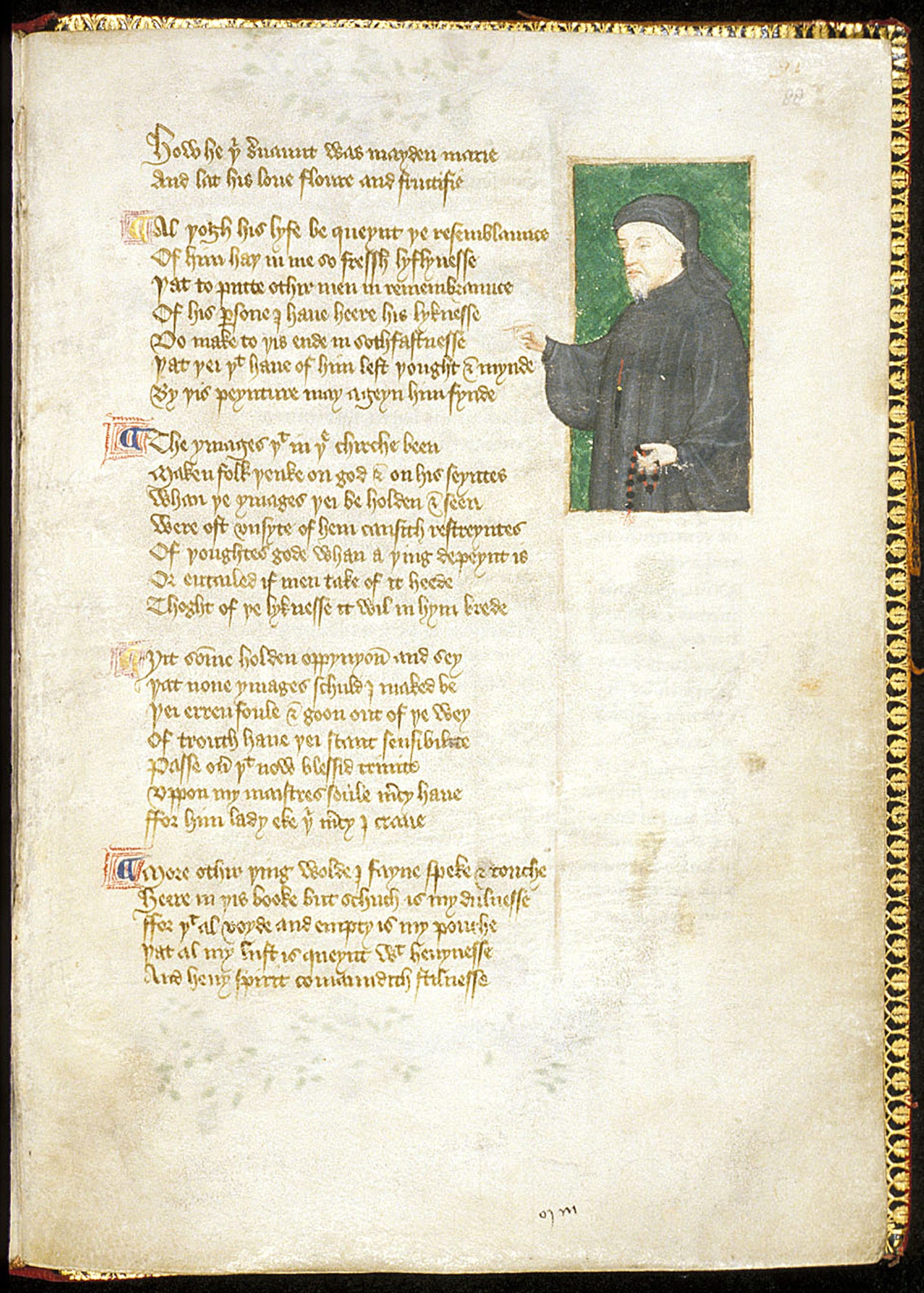
In 1368 tragedy struck and Blanche died at Tutbury Castle following the birth of an infant Isabel, who also did not survive. Childbirth in the fourteenth century was a terrifying affair for women, with around 20% of all births ending in the death of the mother, and more in the death of the infant. Gaunt’s sorrow was immortalised in English verse in the The Book of the Duchess by Geoffrey Chaucer, a eulogy to the young duchess composed around the time Blanche’s (and later Gaunt’s) tomb was constructed by architect Henry Yvele. At the beginning of Chaucer’s verse, we meet Gaunt - the man in black- as part of a dream sequence. He is shrouded in grief, consumed by sadness, as he mourns his lover, the Lady White. Chaucer had fought alongside Gaunt on campaign in 1358 and was originally part of his brother Lionel’s household — his earliest appearance in the records as a sort of clothes model, modelling the latest fashion: the Paltok, an incredibly short tunic worn with tights.
Over the next thirty years Gaunt and Chaucer moved in and out of each other’s life stories and Gaunt always supported Chaucer’s family with gifts and positions in various royal households. Thomas, Chaucer’s son even accompanied Gaunt to Spain in 1386. Eventually, a decade later, Gaunt and Chaucer even became brothers in law, after Gaunt married Katherine Swynford, Philippa Chaucer’s younger sister.
After and shortly before Blanche’s death, Gaunt was heavily involved in European politics and around this time his fascination with Castile was piqued. Castile was the largest kingdom on the Iberian peninsula sandwiched between Navarre, Portugal, Aragon and Granada. All of these kingdoms combined are what we now know as Spain. Castile was a superpower in 14th century politics with a vast and experienced naval fleet and it controlled trade routes to the east connecting the west to the Silk Roads and it provided England with horses, wax, iron, oil, olive oil, cloth, wool and salt.
In 1366, two brothers of Castile became embroiled in their own war of succession, pitting against each other for the throne. Pedro, known by his moniker- Pedro the Cruel, after murdering members of his family, sought an alliance with the Black Prince and England and Enrique Trastamara, sought aid from the French.
This culminated in the Battle of Nájera, one of the less famous but no less important battles of the Hundred Years War. Despite battle happening on Spanish soil, this was still very much between England and France, resulting in another English victory and John of Gaunt’s formative and only experience of pitched battle, alongside his brother who placed Gaunt at the Vanguard- the first line of attack. As both vanguards collided on the dusty plain of Nájera, surrounded by grape vines, there was a dramatic melée of blood, sweat and steel. Spanish slingers (types of trebuchets) hurled rocks into the advancing English, but it was, like so many other battles of the Hundred Years War, the English longbows that prevailed with arrows falling described ‘thicker than rain falls in winter’. Spanish and French forces fled the field but were cut down by cavalry. Those who escaped were cut off but the river Nájarilla and many perished as they tried to cross, drowned by a stampede of fleeing soldiers. The river ran red with blood that afternoon. According to Chandos Herald, a contemporary chronicler, Gaunt fought ‘full of valour, so nobly that everyone marvelled’ and so, John of Gaunt was able to experience martial victory in the same manner as his father and brother before him. Nájera and Spain and the desire to perpetuate this victory remained with Gaunt for al- most the rest of his life but it was not long after the battle that an opportunity arose.
Pedro’s control over Castile following the victory was short lived and he was soon deposed by his brother Enrique, who murdered the unpopular king in one on one combat at a military camp. With her father stabbed to death, Pedro’s heir Constance, fled to the court of the Black Prince in Aquitaine, her father’s only ally. If Enrique could be removed, Constance stood to inherit the Kingdom of Castile and Gaunt, unattached following Blanche’s death, saw an obvious advantage. He was so eager to marry 17 year old Constance he rode out of Bordeaux to meet her and married her in a fast wedding that could not have been more different to his first.
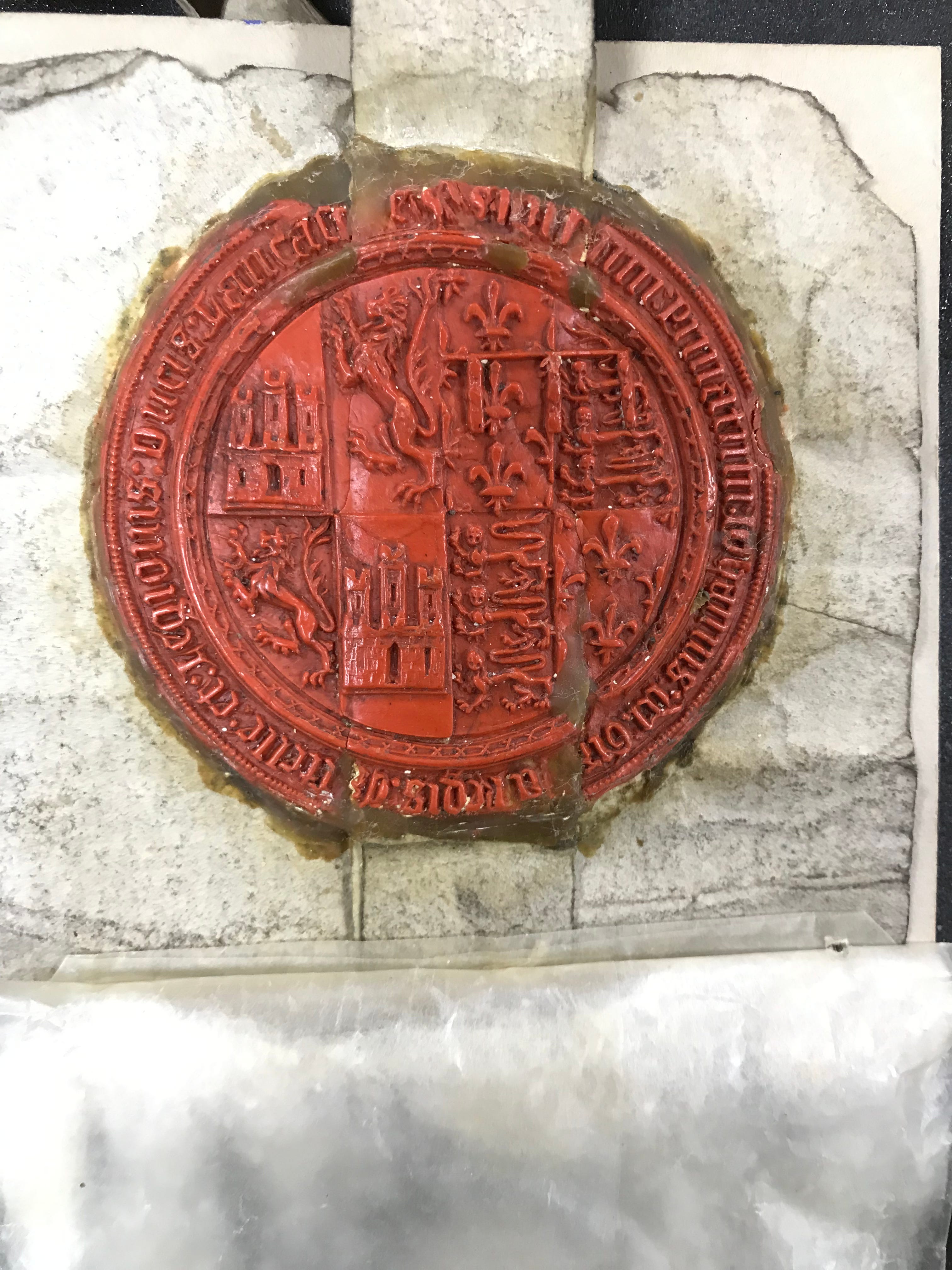
The following year, in 1372 Gaunt returned to England and changed his arms to King of Castile and Leon and set up the Savoy Palace as his kingdom fuelling mistrust, confusion and even outrage from the people of London as Gaunt marched his new retinue of Spaniards through a hostile city. This change is sharp and sudden, and by the change in his seal — an important administrative tool for any nobleman in the fourteenth century — Gaunt was making a point. Here, he quarters the castles of Castile with the leopard of England, and the fleur du lis of France and the three leopards of England on the other side: he was King of Castile and very much part of his father’s vision of a Plantagenet Europe. Grandiose, but in reality, John of Gaunt, a displaced King, building a new Spanish court in England, a space hostile to foreign peoples. Confused and suspicious of Gaunt’s ambitions, Londoners began to turn on him.
England in the 1370s had become politically fractious. Edward III was embroiled in a consuming love affair with his mistress, Alice Perrers, and had suffered possibly multiple strokes. The Black Prince had returned from Bordeaux so unwell he was carried everywhere on a litter. No parliament had been held for three years so when the king could not avoid the commons any longer, he called a new parliament and made himself scarce thrusting John of Gaunt forward as his representative. In what has become known to posterity as ‘The Good Parliament’, Gaunt had to hear a catalogue of grievances from the angry commons, who accused the king of licentious behaviour. Alice Perrers was accused of witchcraft and fiddling the crown purse as well as multiple accusations against the King’s inner circle of politicians for corruption. The Good Parliament lasted a record three months and John of Gaunt’s attempts to keep the peace, adhere to the Commons requests, but retain Crown dignity proved impossible. To add to a complex situation, further personal disaster struck. In the middle of proceedings the Black Prince passed away yet Gaunt, devoted to his brother, had little time to grieve. It is possibly the loss of the Prince that prompted Gaunt to eventually undo the Commons efforts in the Good Parliament only months later. He returned a banished Alice Perrers to his father and disgraced officials to their original positions. He fell out with the Bishop of London which prompted the first attack on the Savoy Palace. His retainers were attacked in the streets, his arms reversed as a sign of a traitor and a rumour was spread that he was not the king’s son, but the son of a flemish butcher, smuggled into the royal crib to replace a stillborn girl. Gaunt was warned of this cruel rumour by a loyal servant named Maud, the former nurse of his daughter Philippa. Her warning still survives in the National Archives. John of Gaunt had become unpopular by his steadfast loyalty to his family. An ardent royalist, he refused to witness his father’s authority be usurped by the Commons. So much so, he knowingly re-instated corrupt officials who had stolen from the realm. All of this made people suspicious of Gaunt, so when Edward III died in 1377 and the young Richard ascended the throne, a new rumour circulated that Gaunt had his eye on the Crown for himself. This is unfounded. Gaunt had sworn an oath on his brother’s death bed to oversee Richard’s coronation. He went further than this, installing himself at the centre of ceremonial practices throughout the celebrations in order to demonstrate his support for his nephew on a public stage.
Ultimately, Gaunt’s chief contention was to protect the interests of the Crown, in order to achieve a smooth ascension for Richard. Before Parliament, he made another bold statement: he swore loyalty to his nephew whilst on bended knee before the entire chamber. Despite his clear display of loyalty Gaunt’s unpopularity escalated, particularly with the Church. Around this time, Gaunt showed support and even patronage for the Lollard preacher, John Wycliffe, later dubbed ‘the flower of the reformation’. Wycliffe preached against clerical wealth and argued for the translation of the bible into the vernacular. Gaunt’s association with Wycliffe caused a rift with the bishop of London, William Courtenay, and Londoners who supported him. Gaunt’s falling out with the church was only catalysed further by his continuing relationship with the ‘maistresse’ of his daughters, Katherine Swynford, by whom he had four children. Dubbed a ‘fornicator’, their love affair was considered scandalous and an expression of Gaunt’s arrogance and self importance as he conducted the affair publicly whilst his wife, Constance remained largely at Hertford or Tutbury Castle with their infant daughter, Katherine.
By the 1380s, John of Gaunt had become a figure of contention in London, and all of this animosity towards him came to a head during The Peasants Revolt in 1381. ‘When Adam Del’vd and Eve span, who was then the gentleman?’ Was the a motto of the Revolt that took place across England in June 1381 following a final crippling tax on the English people, causing them to rise up in their thousands. London was the principle target of the revolt and John of Gaunt was named as an oppressor of the people. John of Gaunt has historically been associated with the Peasants Revolt as an instiga- tor of oppression. But was this the case? Not according to the official record, in the November 1380 parliament at Northampton, opened by the ill fated archbishop Simon Sudbury and where an increased tax was agreed. As the tax on the English people was raised, John of Gaunt was not present, but in Berwick negotiating with the Scots, as he was — fortunately for him — when the rebels attacked his home, Savoy Palace the following June. He did not join the king at Northampton until the tax issue had already been agreed. Yet, he has been historically blamed for its crippling effect.
“We will have no king named John” chanted the rebels in June as they marched on the Savoy Palace, Gaunt’s famous home on the strand, overlooking the river, described as ‘the fairest manor in the kingdom’. The Savoy Palace was destroyed during the Revolt, worse hit than any other building in London, so irretrievably damaged, repair was not deemed necessary. Rebels from London entered the palace hell bent on destruction and they decimated all of Gaunt’s property. Plate, expensive tapestries, headboards encrusted with jewel were thrown onto a large pyre in the great hall. A mock Gaunt was impaled on a pike, using his Jakke - a type of tunic or surcoat- and hacked at by axes and used as an archery target. Rebels found their way into the cellars and found Gaunt’s ample wine supply- barrels of wine from Gascony. “A revel” they cried as they tucked in resulting in a Bacchanalian orgy underneath the palace.
However whilst this was going on, barrels of gunpowder were being rolled onto the pyre in the Hall. The rebels believed their contents to be filled with luxury goods but in- stead these barrels ignited and a blaze ripped through the Great Hall trapping those in the cellars. Around thirty bodies met their death in the cellars of the the Savoy.
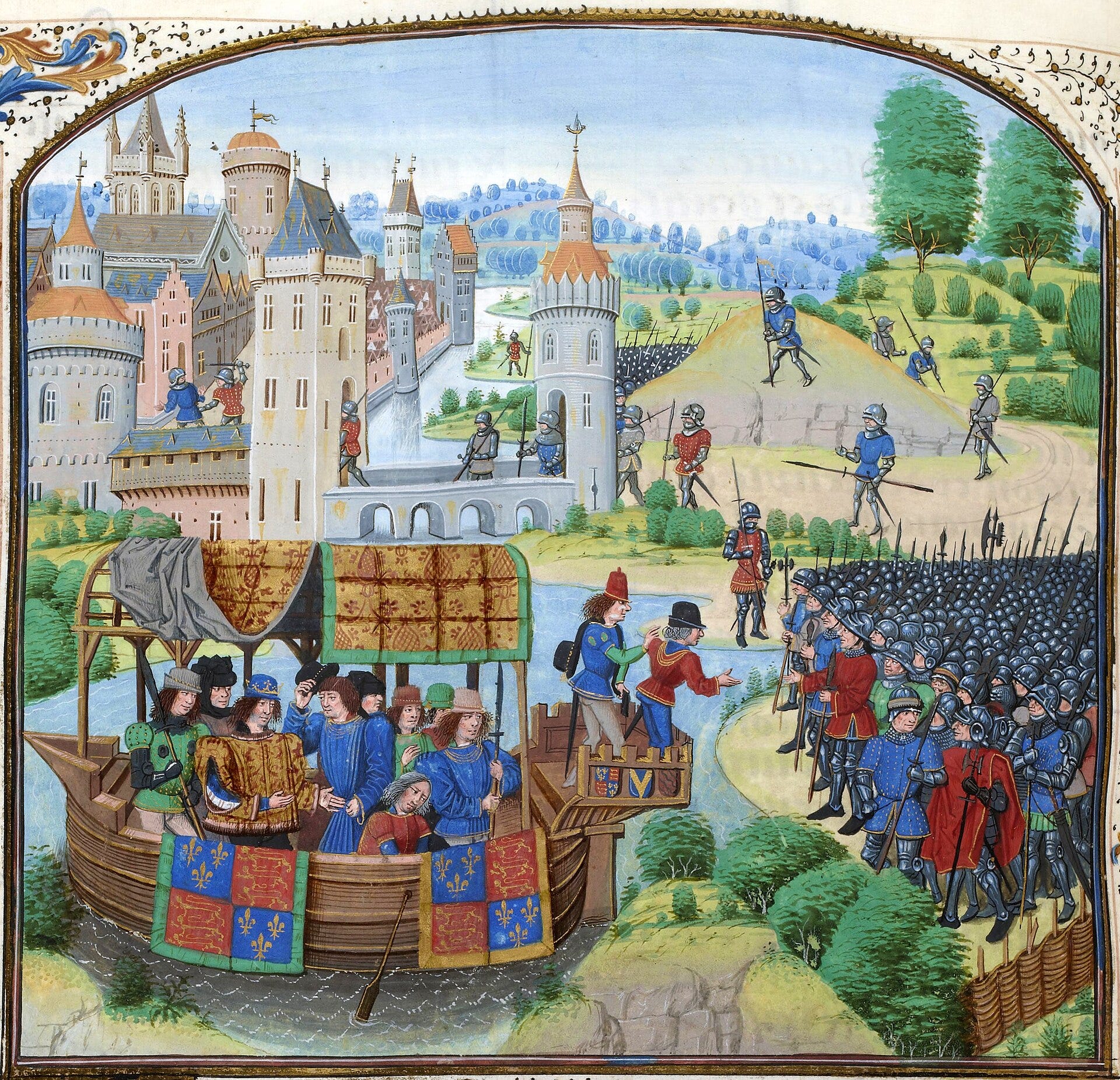
The Savoy was target mainly from Londoners due to his unpopularity there, however elsewhere in the country, he was defended. The citizens of Leicester took up arms against a rebel army they believed were marching on the city, proudly Lancastrian, to destroy Gaunt’s property. Despite this John of Gaunt, whilst in Berwick, was highly vulnerable. Richard had not communicated with his uncle, whose head was a hot commodity in London and Gaunt was refused passage south from Henry Percy, a leading member of the nobility and keeper of the North. John of Gaunt bashfully returned to Scotland where he was in fact treated respectfully and kindly. He showed gratitude for his by gifting the earl of Carrick’s son a gold salt cellar in the shape of a dove.
The revolt was a pivotal moment in Gaunt’s life, for he became seemingly penitent following the attack. It is possible that he believed that his support of Wycliffe and his relationship with Katherine Swynford invited Divine punishment against him, or that he needed to appease the Church. Gaunt ceased to patronise Wycliffe in the 1380s and he did end his affair with Katherine Swynford, but not without feeling for when the dust settled he wrote to Sir John Marmyon, steward of Knaresborough with an order to purchase a piece of land by Roecliff green, 120 by 100 foot and there to build a chapel ‘in honour of Our Lady and Saint Katherine’. Where the Revolt was cataclysmic for Gaunt, his nephew had developed self confidence and a sense of his own regality, believing his kingship was certainly providential. From this point Gaunt’s relationship with Richard was highly volatile, at some points even dangerous.
Richard made the mistake of his great grandfather Edward II and demonstrated blatant favouritism to certain courtiers. One named Robert de Vere, rose up the ranks of court society rapidly and concerned himself with anybody who stood in his way. Though Gaunt spent less time at court than he did before 1381, he was still an omnipotent and levelling presence. Richard and De Vere, both impinged by Gaunt’s measured authority, plotted against him and there was even a rumour that even got wind of a plot to assassinate him. Hearing of this, Gaunt intercepted the king at the palace of Sheen and confronted him, though his confrontation was not fearless, for he was secretly wearing a breastplate under his clothes. Fortunately for Gaunt, Richard buckled under the pressure of the confrontation and offered Gaunt a grovelling apology.
John of Gaunt and Richard had different ideas of how the country should be run. Richard was an aesthete with little taste for war, whereas Gaunt sought to extend Plantagenet expansion in Europe. Uncle and nephew came to loggerheads constantly until Gaunt finally got his wish and lead a campaign into Castile to take the throne by right of his wife, Constance. In 1386, Richard gave John of Gaunt a golden crown and Gaunt set sail from Plymouth with his wife Constance and their daughter, as well as his daughters by Blanche, Philippa and Elizabeth. Henry Bolingbroke, his son and heir, stayed behind, likely to watch over Gaunt’s lands and property and the increasingly tyrannical Richard, whom Gaunt did not trust.
The first stop on Gaunt’s expedition for kingship was Santiago de Compostela, the holy city of Spain, mimicking the same idea his father had in 1359 when he attempted to take Reims, the holy city of France where kings were historically anointed and crowned. Santiago capitulated easily, but Gaunt did not have the same luck thereafter.
Juan Trastamara, son of the recently deceased Enrique and new King of Castile, applied scorched earth policy to the country, leaving nothing in the path of hungry soldiers, as he and his army hid behind fortifications littered across the kingdom.
Gaunt’s men complained of the landscape, the lack of loot, food and the hot climate. The campaign was doomed from the outset. As the English marched through the barren landscape, they couldn’t get the Spanish to fight and the English began to perish with heat exhaustion and a plague that ravaged their camp.
The chronicler Jean Froissart describes soldiers trying to quench their thirst by drinking strong Spanish wine, but as they grew drunker and more dehydrated their bodies became parched and sick.Over a third of Gaunt’s army died in Spain and eventually men began to desert, making pacts with the Castilians for safe passage.John of Gaunt was forced to accept defeat twenty years after Nájera and as a symbol of his defeat, he handed his gold circlet to his enemy and victor of Spain.
However all was not lost and what Gaunt didn’t realise in his lifetime, was realised after his death.A marriage agreement was brokered for his daughter by Constance, Katherine, thus uniting England and Spain.
In 1388, Gaunt returned to a politically fractious England. As Gaunt fought for the throne of Castile, Richard had been close to losing his. A party of lords known as the Lords Appellant, who included Gaunt’s son Henry and his brother Thomas of Woodstock, duke of Gloucester, had risen up against Richard and his corrupt coterie who were either banished or executed. Following years of violent outbursts, lavish spending and favouritism, Richard was forced to hear the complaints and requests of the lords. When Gaunt returned, a steady and loyal figure, Richard was relieved to welcome him home, despite their previous differences. Following the disastrous campaign in Castile, Gaunt was occupied with peace not war, however Richard was bent on revenge. Almost a decade after the Lords Appellant had risen up against Richard, the king struck back and had his own uncle- Gaunt’s brother- the duke of Gloucester murdered at Calais. He was suffocated with a mattress. John of Gaunt is said to have wept as his brother was posthumously tried for treason. Gaunt could not save his brother for he desperately needed to protect his son, Henry. Yet having sworn to the Black Prince that he would protect Richard, his hands were tied and he desperately tried to keep the peace, avoiding confrontation with the volatile Richard at all costs.
With Gloucester dead, Richard played a political game with the remaining Lords Appellant- Henry Bolingbroke and Thomas Mowbray, immortalised by Shakespeare in his history play, Richard II. Bolingbroke and Mowbray had played into Richard’s hands in a dispute, resulting in a duel between them, ordered by Richard.
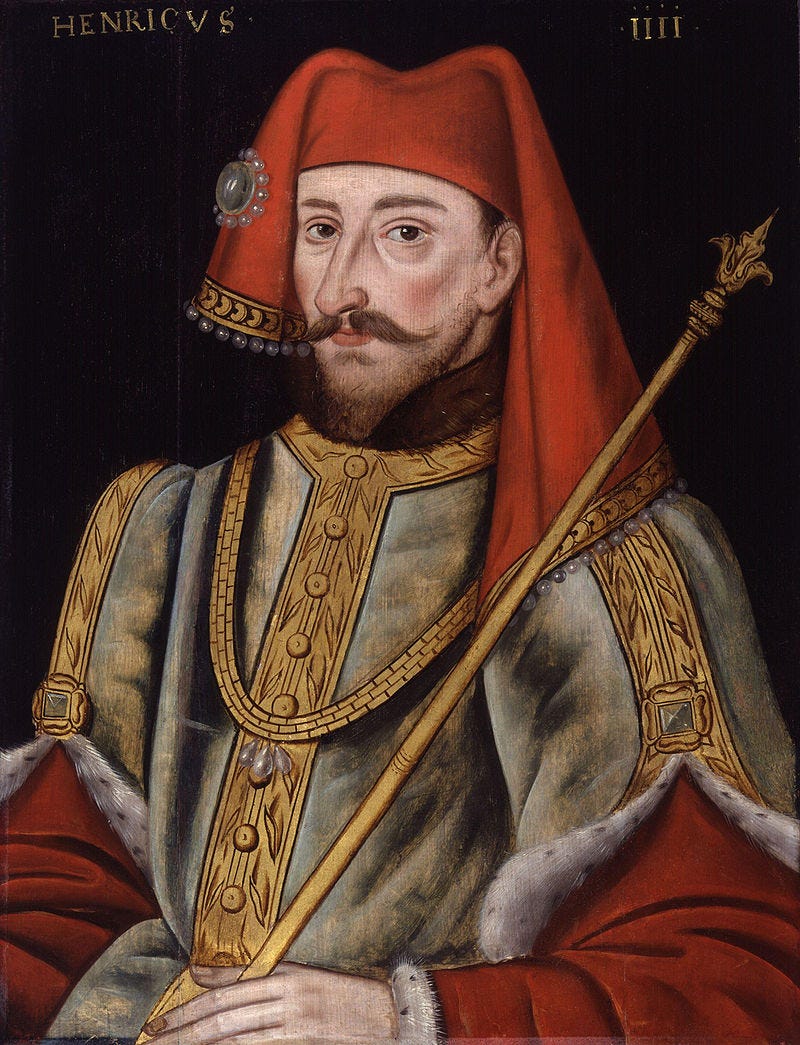
Bolingbroke was sent armour from Italy and spent time with Gaunt in the lead up to the largest military showdown on English soil in history. On the day of the duel, the two men pulled their horses up to the list before a throng of spectators. They lowered their lances... then Richard stopped the duel and exiled both men. Mowbray for eternity and Henry Bolingbroke for a decade. Old and sick, Gaunt pleaded with Richard, who decreased Bolingbroke’s sentence by only a handful of years. Devastated, Gaunt parted with his son, never to see him again.
The final years of Gaunt’s life were much like this, despondent and despairing of the state of the realm- much how Shakespeare depicted him centuries to come; ‘Old Gaunt, time honoured Lancaster’. Tired, defeated, an echo of former Plantagenet martial and chivalric glory. His final years were spent consolidating his affairs. Richard permitted Gaunt to legitimise his children by Katherine Swynford, titling them ‘the Beauforts’ after his lands in France and finally, Gaunt married Katherine after Constance died. Gaunt appears to have loved and respected Katherine Swynford. He saw to the safety and prosperity of their children and despite how little we can tell about their affair, his gifts to her speak volumes. Land, money, wine and fuel for her household, property.... Gaunt did not gift Katherine trinkets, but he saw to her welfare, status, comfort and above all, her security.
John of Gaunt died at Leicester Castle on 3 Feb 1399 with his third wife Katherine by his side. His son and heir, Henry had been exiled by Richard and Gaunt died in agony over the fate of his family and his legacy. In a bizarre act of memento mori, Gaunt was laid out for 40 days, four times the normal amount of time which speaks of an extreme penitence as he was washed of his sins by candlelight ensconcing his cold body.
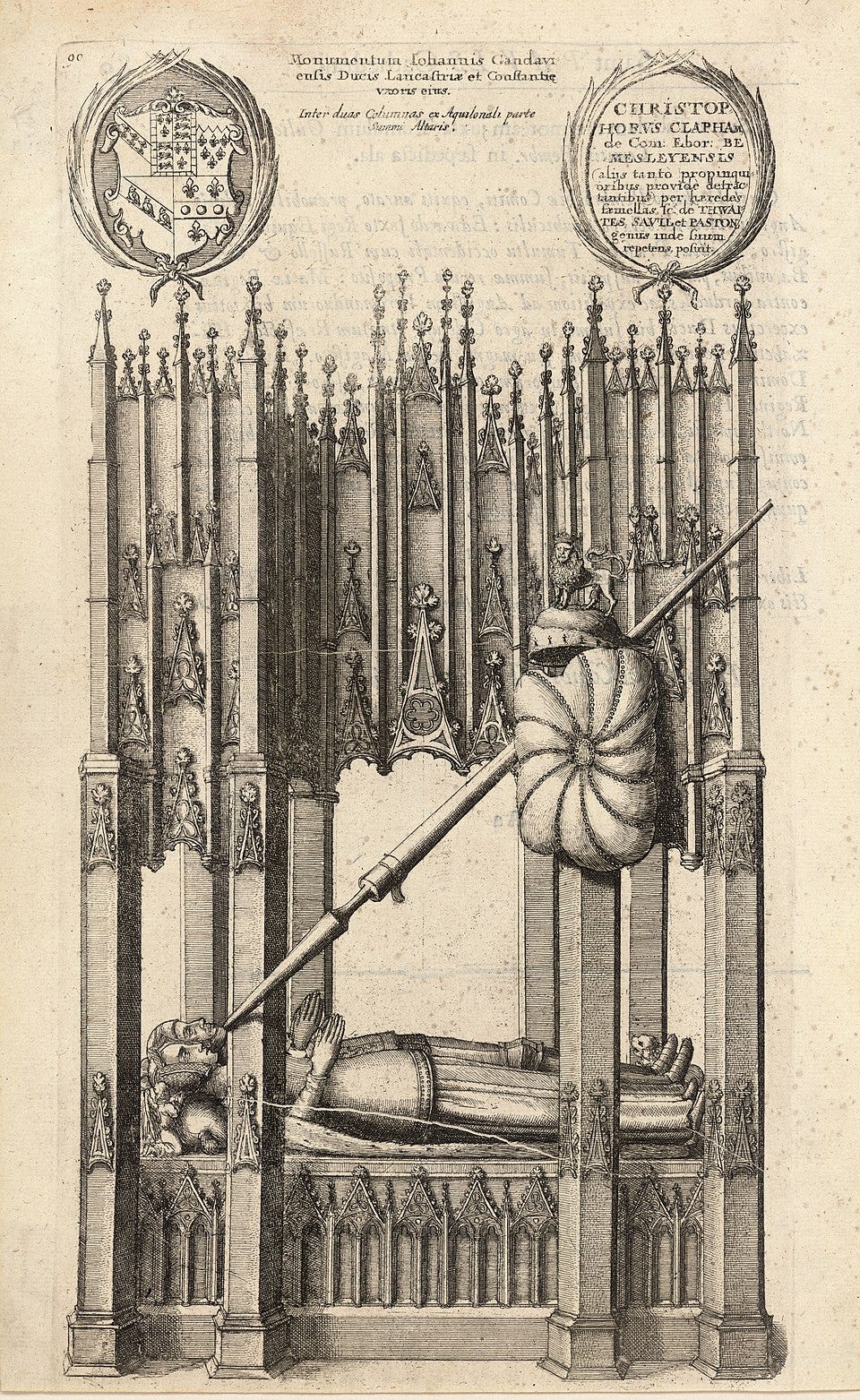
He was buried at St Paul’s Cathedral next to Blanche in a tomb designed by architect Henry Yvele tomb — now destroyed following the 1666 fire. However some drawings remain and depict Gaunt and Blanche clasping one another’s hands, a romantic trope of 14thc couples tombs but speaks of what the poet Philip Larkin calls, a ‘stone fidelity’. Gaunt’s final act was in fidelity to Blanche, to Lancaster. Loyal and honourable. John of Gaunt’s dynasty was not realised in his lifetime, but it shaped the course of English history. The Beauforts became contenders for the crown through Margaret Beaufort and her son Henry Tudor. And Spain and England were united with the marriage of cousins- Katherine of Aragon and Prince Arthur.
The Lancastrian motto was: souveignez vous de moi, meaning ‘remember me’. It appears that John of Gaunt wished to be remembered for his loyalty to the Plantagenets and their desire for a Plantagenet Empire, but ultimately as a truly European Prince.
If you would like to buy a copy of my first book, The Red Prince, John of Gaunt Duke of Lancaster (Oneworld, 2021) you can find it here.