The Coventry Necromancer
Murder by Magic: An Unsolved Case in the Medieval Record

When I was in the National Archives about eighteen months ago researching Edward II for Sceptred Isle, I had a look through the King’s Bench records. The King’s Bench is the highest criminal court across the realm and would deal with high profile cases — particularly anything associated with treason. A recent case that came to light from this particular record was the one associated with Geoffrey Chaucer and the accusation of “raptus” (rape). This was discovered by Euan Roger and discussed by him here. I actually came to the King’s Bench records because I wanted to read it for myself, which I did, but also came across something else that was weird and wonderful.



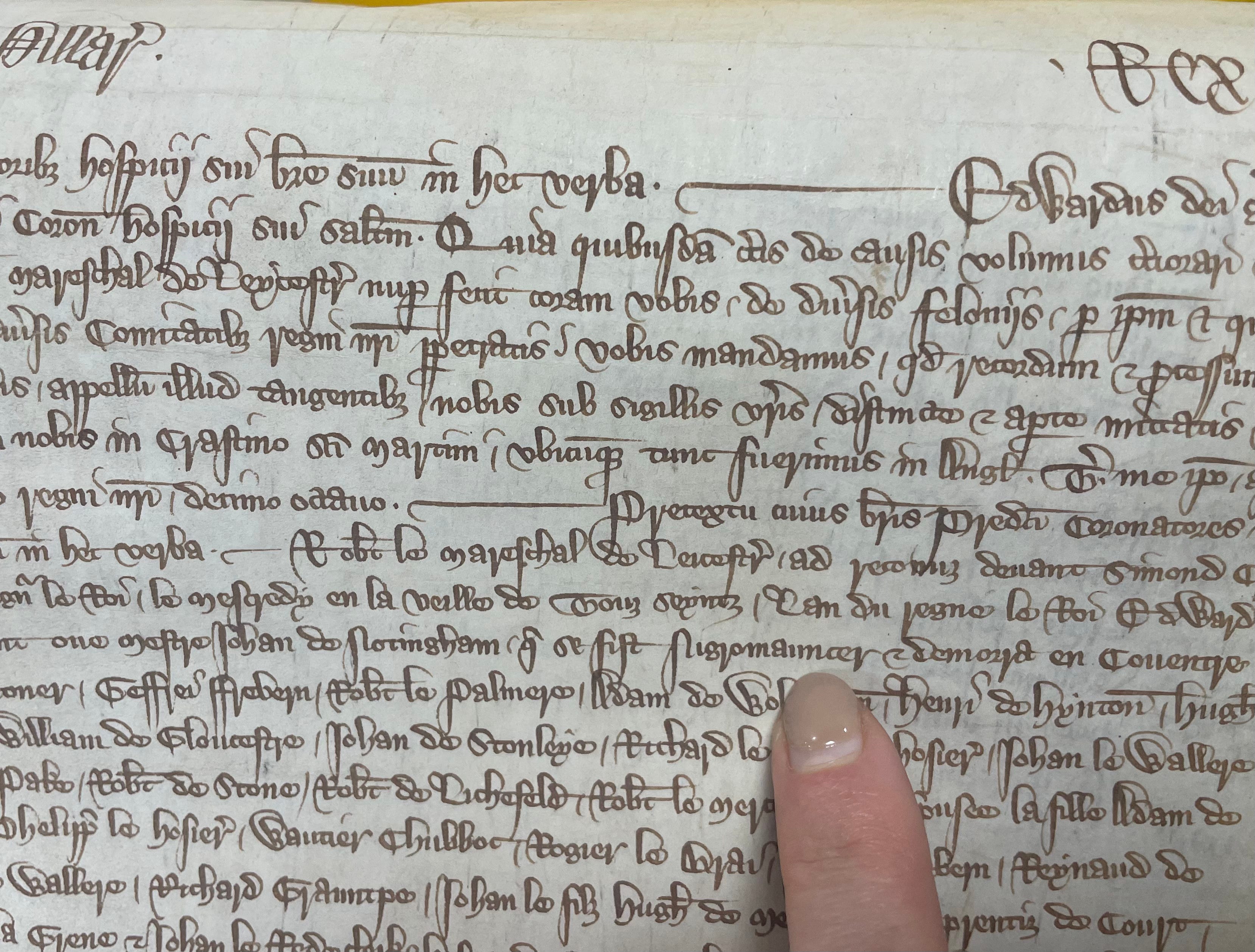
In around 1323/24 a group of men from Coventry were arrested and put on trial for associations with a necromancer and a wider plot to kill King Edward II and his right hand man, Hugh Despenser the Younger, along with his father, Hugh Despenser the Elder. The trial itself is recorded in the main plea role of the King’s Bench 1324-1325 and twenty seven men were associated with it, many with names like ‘Richard le Taillour’ suggesting they were skilled local craftsmen or merchants.
The actual record is the testimony of Robert le Mareschal of Leicester, who was the accomplice of the accused necromancer (written ‘nigromancer’) and the eventual whistleblower, after getting cold feet. According to his testimony, this large group of local men came to the home of John of Nottingham seeking his help in having Edward II murdered, along with the earl of Winchester, (Hugh Despenser the Elder), Hugh Despenser the Younger and the prior of Coventry — who they accused as being ‘rough’, perhaps exerting his power beyond what was reasonable and behaving brutishly. Their issue with the king and the Despensers appears to have been that they were supporting the prior of Coventry, despite his punitive actions against its people. John of Nottingham agreed to help these men along with Robert le Mareschal of Leicester for a generous fee of twenty pounds — and fifteen for le Mareschal — and the promise of a safe house should he need it. They all swore each other to secrecy and everything looked promising.