
Finding Arthur
Who was the king of legend? Part One

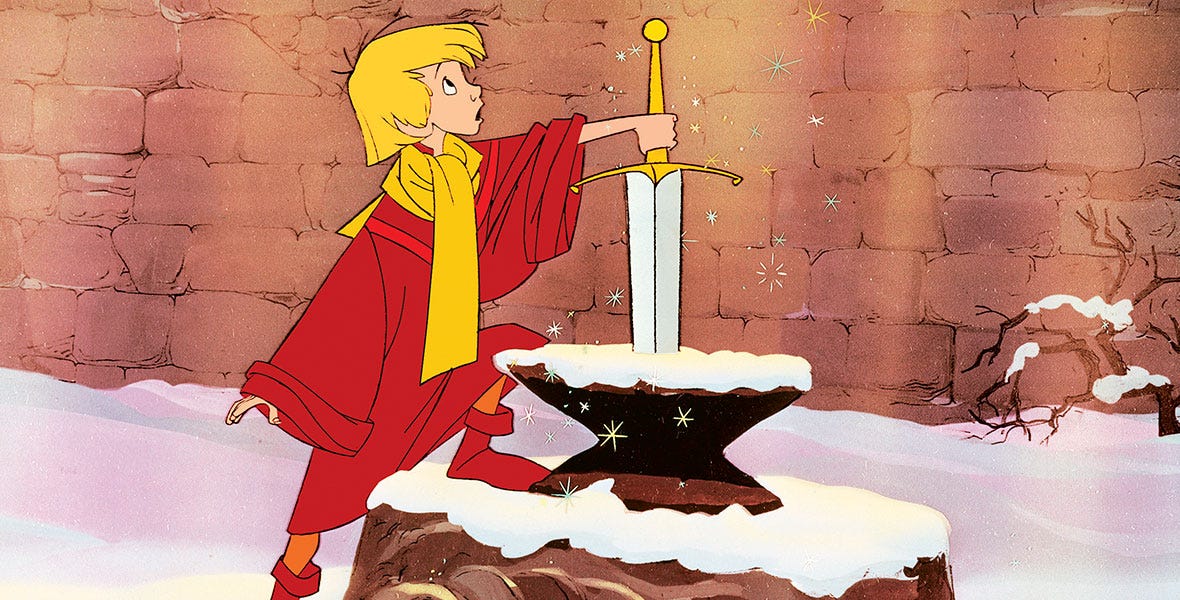
In the Eildon Hills near Melrose southern Scotland, King Arthur lies, waiting in slumber with his knights until it is his moment to return. A messiah restoring order and unity to the broken world. This story was retold by Sir Walter Scott in his Tale of Canobie Dick as he describes a horse trader (Canobie Dick) who is approached by an old man in strange clothing who offers him ancient coin for his horses. In order to recieve payment Canobie Dick follows the man to the Eildon Hills, where, at the foot of the hills, he is lead through a secret door into a cave. Inside the cave are an army of mounted knights fast asleep. Among them is Arthur, clearly identified by his crown. Baffled, Canobie Dick is lead to a table on which he is presented with a horn and a sword. Picking up the horn — the least aggressive of the two objects — he blows into it and wakes the sleeping king and his knights. But they are not happy about it, in fact they are furious he was not brave enough to wield the sword instead. Dick is expelled from the cave with a forceful wind and hurries to tell local shepherds what he has seen before he falls down dead. This particular story, re-inscribed by Scott, is also closely associated with the thirteenth century border prophet, Thomas the Rhymer, localising the tale to the borderlands. But it is not the only version. Arthur is said to be resting in caves across the British Isles, from Somerset to Wales. Even as far as Italy and Mount Etna. He is universally known as the ‘Once and Future King’, his legend having occupied the minds of many for centuries, not only in Britain but in countries across Europe. His legend has not only infiltrated local culture through storytelling and the imprinting of Arthur on local landscape, but it has been adapted and contrived to serve kings politically. Arthur has been used as a vehicle by which nations can be claimed.

Just to be clear — Arthur was not, as we understand, a real person. He was legend, a figure akin to a god-hero (think Hercules or the like). But who he was even as a literary figure or whispered spectre has shape shifted.
This all depends on who or what you read.
